
JSC 2026 Vol21 Article 7
Creative Interventions in School Counseling: A Tiered Approach Using Student Success Skills
Hannah Bowers Parker & Greg Brigman
School counselors are uniquely positioned to address students’ academic achievement, career readiness, and social-emotional well-being through a comprehensive service model that spans individual counseling, group interventions, classroom guidance lessons, and consultation with educators and families (American School Counselor Association [ASCA], 2025). In addition to the breadth of their responsibilities, many school counselors face significant systemic challenges, most notably managing caseloads that far exceed the recommended 250:1 ratio (Lambie et al., 2019). Research consistently identifies high student-to-counselor ratios as a barrier to effectively meeting students' individualized needs, especially in under-resourced schools (Parzych et al., 2023). In response, best practice recommendations emphasize that school counselors should operate within a Multi-Tiered System of Supports (MTSS) framework (ASCA, 2021), where interventions are layered across universal (Tier 1), targeted (Tier 2), and individualized (Tier 3) levels to ensure that services are proactive, equitable, and responsive to diverse student needs (Goodman-Scott et al., 2020; Sink, 2016). Practicing from an MTSS approach enables school counselors to deliver structured, developmentally appropriate, and evidence-based interventions efficiently, maximizing impact even within the constraints of limited time and resources.
Central to these emerging practices is the intentional use of creativity as a counseling tool, which research has shown to enhance student engagement, deepen emotional processing, and foster stronger relationships between counselors and students (Villalba & Myers, 2008; Lemberger & Clemens, 2012). Creative interventions, such as guided imagery, expressive arts, music integration, storytelling, and movement-based exercises, provide accessible and culturally responsive pathways for supporting students’ social-emotional development (Jean-Berluche, 2024). Creative approaches effectively embedded across all tiers of MTSS have demonstrated positive student identity development, increased classroom engagement, and reduced barriers related to language, culture, or learning differences (Urbina et al., 2017). By integrating creative strategies within a tiered service delivery model, school counselors can provide student-centered support that improves academic achievement, attendance, fosters cognitive growth, and enhances connection to school, particularly in settings challenged by large caseloads and limited resources (Villares et al., 2023; Villares et al., 2012).
Creativity in School-Based Counseling
School counselors are encouraged to use evidence-based practices in their chosen programming (ASCA, 2025). While creative interventions have been utilized in school counseling curricula for years, they have been a historic form of healing for centuries (Degges-White & Colon, 2014). A systematic review of evidence-based creative art therapies delivered by school-based therapists in United States schools identified outcomes from six qualifying studies that reported psychosocial and behavioral improvements among elementary, middle, and high school students (Frydman et al., 2022). High school students who participated in an expressive arts classroom guidance program facilitated by their school counselor showed increased student-reported resilience, psychological well-being, and positive mental health (Ermis-Demirtas et al., 2023). In middle school settings, students showed increased self-reported perceptions of academic performance, interpersonal competence, and multicultural sensitivity after participating in an after-school poetry-focused art intervention (Forrest-Bank et al., 2016). Furthermore, art therapy techniques, coupled with reality therapy, were found to be effective for school counselors in building rapport, improving students' skills, and developing problem-solving strategies when working with elementary students facing chronic conditions (Davis et al., 2019). Considered collectively, creativity has proven effective for K-12 students when utilized by school counselors and therapists in school settings.
Multi-Tiered Systems of Support
MTSS provides a comprehensive, data-driven framework that allows school counselors to deliver equitable, proactive services tailored to meet the academic, behavioral, and social-emotional needs of all students (Goodman-Scott et al., 2020; Goodman-Scott et al., 2023). Aligned with the ASCA National Model (2025), MTSS is structured into three tiers: Tier 1 offers universal interventions delivered schoolwide; Tier 2 targets small groups of students with identified needs; and Tier 3 provides individualized support for students requiring intensive intervention (ASCA, 2021; Sink, 2016). Recent research highlights the growing role of school counselors as essential members of MTSS teams, emphasizing their ability to use screening data, monitor student progress, and implement targeted interventions that align with systemic school goals (Goodman-Scott et al., 2020; Goodman-Scott et al., 2023). This tiered approach enables school counselors to integrate evidence-based practices with developmental and preventive counseling strategies, optimizing their impact across diverse student populations. Evidence-based programs, such as the Student Success Skills (SSS), offer a solution in the form of a structured, comprehensive, and creativity-driven curriculum, best delivered within an MTSS framework, providing a promising pathway for school counselors to deliver impactful and scalable creative K-12 interventions.
The Student Success Skills Program
The SSS program aligns with an MTSS framework by offering curricula that address student needs across universal (Tier 1), targeted (Tier 2), and individualized (Tier 3) levels, using creative strategies to promote academic, social, and emotional development. At Tier 1, Ready for Success (K–3) and the SSS Classroom Manual (grades 4–12) provide classroom-based lessons focused on self-regulation, goal setting, and engagement (Brigman & Webb, 2007; Brigman & Webb 2023). For Tier 2 support, the SSS Group Manual delivers small-group interventions to reinforce these skills (Brigman et al., 2010). Tier 2 and Tier 3 differentiation is further supported through the Exceptional Student Success Skills Manual (Brigman et al., 2020), with cultural responsiveness addressed through the Spanish Cultural Translation (Urbina et al., 2017) and home-school connection strengthened via the Parent Success Skills Manual (Brigman et al., 2012). The College and Career Success Skills Manual extends support for older students with creative goal-setting and postsecondary planning tools (Brigman & Villares, 2019).
The efficacy of the Student Success Skills (SSS) program is strongly supported by a robust body of empirical research. The most recent meta-analysis by Villares and colleagues (2023) comprises 23 studies and indicates significant medium-to-large effect sizes across both academic achievement and social-emotional skill development, including improvements in reading, math performance, interpersonal skills, and self-regulation. The results demonstrated consistent benefits across elementary, middle, and high school students, highlighting the program’s adaptability and positive impact on diverse populations. These findings are built on earlier meta-analytic work, which similarly reported positive academic and behavioral outcomes, establishing SSS as a well-validated, evidence-based practice in school counseling (Villares et al., 2012).
Complementing these meta-analytic results, longitudinal studies reveal the sustained impact of SSS interventions. Notably, Lemberger and colleagues (2018) documented longitudinal gains in academic achievement mediated by improvements in self-efficacy, goal-setting, and social competence, with effects that persisted over an academic year and contributed to continued growth in reading and math achievement. Randomized controlled trials further reinforce these findings as results indicated reductions in behavioral disruptions and increases in prosocial skills following intervention (Carey et al., 2008; Webb et al., 2019). Additionally, the program’s flexibility across delivery formats proves advantageous for students, including classroom-wide lessons (Brigman et al., 2023), small-group sessions (Brigman et al., 2010), culturally responsive adaptations (Urbina et al., 2017), and creative modalities like guided imagery, music, movement, and collaborative reflections support its utility as a holistic approach to student development. Together, this evidence base positions SSS as a high-impact intervention that not only improves academic and social outcomes but also promotes lasting developmental gains. However, the SSS program has never been positioned as a creative-based intervention, even though its foundation is composed of numerous activities such as guided imagery, expressive arts, music integration, storytelling, and movement-based exercises. The following section provides a detailed overview of the creative activities embedded within the SSS program, highlighting how these strategies support student development through expressive and experiential techniques.
Operationalizing Creative Counseling Through MTSS and SSS
Although creativity, MTSS, and the SSS program are often discussed separately, they function most powerfully when conceptualized as an integrated system. Figure 1 illustrates this alignment, positioning creativity as the foundation, MTSS as the delivery structure, and SSS as the operationalized application that produces measurable academic and social-emotional outcomes.
Figure 1
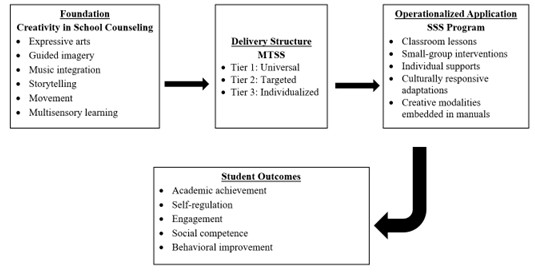
Figure 1 illustrates the conceptual alignment among creativity in school-based counseling, the MTSS framework, and the SSS program. Creativity serves as the foundational evidence base, supported by research demonstrating improvements in psychosocial functioning, resilience, and engagement (Frydman et al., 2022; Ermis-Demirtas et al., 2023). MTSS provides a structured, tiered delivery system through which these practices are implemented in universal, targeted, and individualized formats (ASCA, 2021; Goodman-Scott et al., 2020). The SSS program operationalizes creative strategies within this tiered structure, offering evidence-based curricula that translate expressive and multisensory approaches into measurable academic and behavioral outcomes (Villares et al., 2023; Lemberger et al., 2018). This model demonstrates how creativity is not supplemental to evidence-based practice, but rather foundational to its design and delivery.
Creative Activities Embedded Within SSS
Creative activities from the SSS program can be implemented across all tiers of an MTSS framework. At Tier 1, creative strategies such as guided imagery, movement, storytelling, music, and multisensory learning can be embedded within classroom guidance lessons to promote universal skill development in self-regulation, engagement, and academic readiness (ASCA, 2021; Goodman-Scott et al., 2020). At Tier 2, these same activities can be delivered in small groups to provide targeted reinforcement of executive functioning, emotional regulation, and goal-directed behavior for students who require additional support. Additionally, these strategies can be intentionally cued within Tier 3 interventions, as school counselors work one-on-one with students to individualize regulation techniques, goal-setting processes, and narrative reframing. Table 1 further outlines creative activities and utility with an MTSS response model. Rooted in expressive and experiential learning, the SSS activities described below demonstrate how creativity functions not as an add-on, but as a structured, evidence-based mechanism for enhancing student growth across universal, targeted, and individualized levels of school counseling practice.
Table 1
Creative SSS Activities Aligned With MTSS
|
SSS Activity |
Creative Modality |
Targeted Skills |
Example Application |
|
Calm Place |
Guided imagery, drawing, sensory visualization |
Self-regulation, stress management, task persistence, nervous system regulation |
Whole-class calming routine (T1); anxiety small group (T2); individualized coping plan (T3) |
|
Brain Gym |
Movement, music, cross-lateral exercises |
Attention, classroom readiness, behavioral regulation, engagement |
Classroom reset activity (T1); executive functioning group (T2) |
|
Goal Setting & Success Sharing |
Creative expression, reflection, peer dialogue |
Self-efficacy, motivation, goal attainment, academic self-management |
Classroom goal tracking (T1); targeted academic support group (T2); individualized academic plan (T3) |
|
Story Structure |
Narrative writing, storytelling, peer feedback |
Problem-solving, identity development, cognitive reframing, resilience |
Classroom resilience lesson (T1); social skills group (T2); individual narrative reframing (T3) |
|
Keep Kool Tunes |
Music integration, playlist curation |
Emotional regulation, mood management, test anxiety reduction |
Pre-test calming strategy (T1); stress management group (T2); individualized coping toolkit (T3) |
|
Memory Boosting |
Graphic organizers, color-coding, kinesthetic memory pegs |
Executive functioning, cognitive processing, academic retention |
Study skills lesson (T1); academic intervention group (T2) |
Calm Place introduces students to relaxation techniques through guided imagery. In each session, the counselor leads students through a slow, calming breathing exercise followed by vivid, sensory-rich visualization of a safe, peaceful place (Brigman et al., 2023). Students have been found to select their bedroom, a favorite vacation spot, or create their unique environment. After the guided practice, students draw or write about their Calm Place, adding personalized details like colors, sounds, and objects that make them feel safe and happy. This multisensory mindfulness approach encourages present-moment awareness through breathing, movement, and sensory-based practices that support nervous system regulation and build students' capacity for learning (Saunders et al., 2024). Mind–body activities have been shown to enhance student engagement (Frank et al, 2017), decrease anxiety (Bazzano et al., 2018), improve stress tolerance, executive functioning, and overall academic achievement (Lemberger-Truelove et al., 2018; Lemberger-Truelove et al., 2021) when incorporated into school counseling interventions. Within SSS, the Calm Place activity is a recurring approach associated with reduced stress and improved task persistence (Brigman et al., 2023).
Brain Gym incorporates playful physical movement to energize and re-engage students during classroom lessons. Counselors lead students through cross-lateral exercises, simple stretches, and repetitive movement set to upbeat, positive music (Dennison, 1992). These activities are designed to cross the body’s midline, supporting hemispheric brain integration, improving circulation, and enhancing concentration. Movement breaks are brief but impactful, often taking five minutes to reset classroom energy. Research supports the inclusion of movement in classroom interventions to reduce off-task behavior and enhance academic engagement (Petrigna et al., 2022), with studies on SSS showing improved classroom readiness following participation in Brain Gym (Villares et al., 2023).
The practice of goal setting and success sharing is embedded within multiple SSS activities, including Looking Good Feeling Good and the Seven Keys to Success (Brigman et al., 2023). These activities involve students setting individual goals, recording them on structured handouts through creative expression, and engaging in reflective discussions. Students select goals aligned with the activity, write down action steps, and report back on progress in subsequent sessions. This process is interactive and peer-supported, as students share strategies and celebrate progress together. Creative thinking is depicted as the process of inquiring, imagining, doing, and reflecting (Vincent-Lancrin et al., 2019). The creative flexibility in how students approach their goals through personal stories, drawings, or affirmations is shown to support autonomy and motivation (Campbell et al., 2025). Structured goal-setting interventions are linked to improvements in academic performance and self-management (Lemberger et al., 2018; Lemberger et al., 2015; Schunk & Zimmerman, 2012, Villares at al., 2024).
Through Story Structure, students learn to frame their personal experiences in narrative form. They write or orally share stories about overcoming obstacles, making good choices, or learning something new. The activity incorporates classic storytelling elements such as beginning, challenge, action, and resolution, while encouraging students to see themselves as capable problem-solvers (Brigman et al., 2023). Counselors model storytelling and encourage peer feedback in pairs or small groups. Narrative techniques are widely integrated into school counseling interventions as a creative outlet to engage in internal processing leading to changes within students' perceived environment (Levy & Bell, 2024).
Keep Kool Tunes empowers students to use music as a self-regulation tool. Students curate personalized playlists of songs that lift their mood, calm anxiety, or energize them (Brigman et al., 2023). They are encouraged to identify specific tracks that evoke happiness and confidence, and to play these during moments of stress or low motivation. This intervention leverages music’s capacity to modulate emotions and elicit positive neurochemical responses (Taruffi, 2021). Furthermore, music has been found to have a positive impact on students' emotional intelligence, prosocial skills, and academic performance (Blasco-Magraner et al., 2021). In SSS, this practice is explicitly linked to managing pressure situations, with students reporting enhanced calmness before tests and presentations (Villares et al., 2019).
Memory Boosting lessons incorporate an array of creative, multisensory strategies. Students create graphic organizers, use color-coded note cards, and engage in body-based memory pegs to reinforce academic concepts. These interactive, student-driven approaches align with best practices in cognitive learning (Weinstein et al., 2018). Technology-based graphic organizers have been shown to significantly improve writing structure and idea generation in high school students, indicating that visual tools strengthen cognitive processing and engagement (Brady et al., 2022). Classroom lessons emphasizing self-efficacy and multisensory engagement can yield moderate-to-large gains in student confidence and academic initiative (Bardhoshi et al., 2017).
The evolving demands of school counseling have necessitated innovative approaches that address the cognitive, behavioral, and emotional needs of students across diverse settings. The intentional use of creative interventions has emerged as a powerful complement to traditional counseling techniques, particularly when embedded within a MTSS framework (ASCA, 2021; Goodman-Scott et al., 2020). While creativity has long been associated with therapeutic growth and student engagement (Degges-White & Colon, 2014; Villalba & Myers, 2008), evidence-based programs like SSS offer a scalable, developmentally appropriate means of delivering creative interventions with demonstrated academic and social-emotional outcomes. Although the SSS program has not been traditionally identified as a creativity-based intervention, its embedded use of multisensory and expressive strategies aligns with the core functions of creative counseling. SSS exemplifies how evidence-based programming can serve as a platform for culturally responsive, experiential learning that empowers students to build academic skills while enhancing their emotional and behavioral competencies (Brigman et al., 2023)
Implications for School Counseling Practice
The creative activities embedded within the SSS program demonstrate how structured, multisensory interventions can be implemented across MTSS tiers to produce meaningful academic and social-emotional outcomes. Practices such as guided imagery (Calm Place), movement-based regulation (Brain Gym), narrative reframing (Story Structure), music-based self-regulation (Keep Kool Tunes), and multisensory academic strategies (Memory Boosting) provide concrete examples of how creativity can be operationalized in classroom lessons, small groups, and individualized supports. When implemented within an MTSS framework, these activities allow school counselors to proactively address regulation, engagement, executive functioning, and goal-directed behavior in developmentally responsive ways (Goodman-Scott et al., 2020; Goodman-Scott et al., 2023; Villares et al., 2024). For students who struggle with traditional talk-based counseling approaches, creative modalities offer alternative entry points for expression, connection, and skill development (Forrest-Bank et al., 2016; Davis et al., 2019).
However, the intentional use of creative interventions also requires appropriate professional preparation and ethical consideration. The ASCA Ethical Standards for School Counselors emphasize counselors' responsibility to practice within the boundaries of competence, seek ongoing professional development, use developmentally appropriate and evidence-based interventions, and protect student confidentiality and dignity (ASCA, 2022). Creative techniques such as guided imagery, narrative processing, and music-based interventions must be implemented with attention to cultural responsiveness, trauma sensitivity, informed consent when appropriate, and alignment with students’ academic and social-emotional goals. School counselors may require administrative support, structured training, and collaborative engagement with MTSS teams to ensure these interventions are delivered consistently and ethically. Professional development opportunities through ASCA conferences, webinars, Specialist trainings, and MTSS-aligned resources grounded in the ASCA National Model and Mindsets & Behaviors (ASCA, 2021; ASCA, 2025) can strengthen counselors’ competence in delivering creative programming responsibly. By embedding creativity within a clear ethical framework, school counselors can expand universal prevention efforts, reduce referrals, and deliver equitable, culturally responsive services across diverse student populations (Urbina et al., 2017; Villares et al., 2023).
Implications for School Counselor Educators & Supervisors
The integration of creativity into school counseling practice also carries important implications for counselor preparation and supervision. As research continues to highlight the effectiveness of expressive, multisensory, and experiential interventions (Degges-White & Colon, 2014; Villalba & Myers, 2008), counselor education programs are encouraged to intentionally incorporate creative modalities into coursework, skills training, and practicum experiences while grounding these approaches in ethical decision-making models. Preparing counselor trainees to critically evaluate when and how to implement creative strategies ensures alignment with professional standards, developmental appropriateness, and MTSS data-driven practices.
Supervision practices can further reinforce ethical and intentional implementation by encouraging trainees to conceptualize cases through creative lenses, assess potential risks or cultural considerations, and reflect on how experiential strategies align with ASCA Ethical Standards and tiered service delivery systems. Exposure to structured programs such as SSS provides future school counselors with a replicable model for delivering creative, evidence-based interventions across tiers while maintaining accountability and documentation. Collectively, these preparation and supervision practices can strengthen counselor confidence, promote ethical discernment, and support innovative yet responsible approaches to comprehensive school counseling.
Conclusion
Creativity remains a powerful yet often under-theorized component of school-based counseling practice. As demonstrated through the conceptual integration of creativity, MTSS, and the SSS program, structured creative interventions can be intentionally embedded across Tier 1, Tier 2, and Tier 3 supports to promote academic achievement, self-regulation, engagement, and social competence. By situating SSS within both a multitiered framework and an ethical decision-making context (ASCA, 2022), creativity is positioned not as an ancillary enhancement but as a foundational and trainable element of evidence-based school counseling. In the face of increasing caseload demands and systemic constraints (Lambie et al., 2019; Parzych et al., 2023), equipping practicing school counselors and counselor educators with structured, ethically grounded creative approaches offers a sustainable, scalable, and equitable pathway for supporting the whole child.
References
American School Counselor Association. (2022). ASCA ethical standards for school counselors. Alexandria, VA: Author. Retrieved from https://www.schoolcounselor.org/getmedia/44f30280-ffe8-4b41-9ad8-f15909c3d164/EthicalStandards.pdf
American School Counselor Association. (2025). ASCA National Model: A framework for school counseling programs (5th ed.). Alexandria, VA: Author.
American School Counselor Association. (2021). The School Counselor and Multitiered System of Supports [Position statement]. Alexandria, VA: Author. Retrieved from https://www.schoolcounselor.org/StandardsPositions/PositionStatements/ASCAPositionStatements/TheSchoolCounselorandMultitieredSystemofSup
Bardhoshi, G., Duncan, K., & Erford, B. (2017). Effect of a Specialized Classroom Counseling Intervention On Increasing Self-Efficacy Among First-Grade Rural Students. Professional School Counseling. 21(1). 12-25. https://doi.org/10.5330/1096-2409-21.1.12
Bazzano, A. N., Anderson, C. E., Hylton, C., & Gustat, J. (2018). Effect of mindfulness and yoga on quality of life for elementary school students and teachers: Results of a randomized controlled schoolbased study. Psychology Research and Behavior Management, 11(1), 81–89. https://doi.org/10.2147/PRBM.S157503
Blasco-Magraner, J. S., Bernabe-Valero, G., Marín-Liébana, P., & Moret-Tatay, C. (2021). Effects of the educational use of music on 3-to 12-year-old children’s emotional development: A systematic review. International journal of environmental research and public health, 18(7), 3668. https://doi.org/10.3390/ijerph18073668
Brady, K. K., Evmenova, A. S., Regan, K. S., Ainsworth, M. K., & Gafurov, B. S. (2022).
Using a technology-based graphic organizer to improve the planning and persuasive
paragraph writing by adolescents with disabilities and writing difficulties. The Journal of Special Education, 55(4), 222-233.
https://doi.org/10.1177/00224669211008256
Brigman, G., Campbell, C. & Webb, L. (2004, 2006, 2010). Student success skills: Group Manual, 3rd edition. Boca Raton, FL: Atlantic Education Consultants.
Brigman, G. & Peluso, P. (2008, 2012). Parent success skills. 2nd edition. Boca Raton, FL: Atlantic Education Consultants.
Brigman, G. & Villares, E. (2019). College/Career Success Skills: Classroom Manual, Boca Raton, FL: Atlantic Education Consultants.
Brigman, G & Webb, L. (2007). Ready for success skills: Classroom manual, Boca Raton, FL: Atlantic Education Consultants.
Brigman, G & Webb, L. (2023). Student success skills: Classroom Manual, 5th edition. Boca Raton, FL: Atlantic Education Consultants.
Campbell, K., Bowers, H., Villares, E., & Brigman, G. (2025). Advocating student-Within-Environment in Action: The Lived Experience of Grade Six Students’ Participation in a Small Group Intervention. Journal of Child and Adolescent Counseling, 11(3), 199–213. https://doi.org/10.1080/23727810.2025.2543695
Carey, J. C., Dimmitt, C., Hatch, T. A., Lapan, R. T., & Whiston, S. C. (2008). Report of the National Panel for Evidence-Based School Counseling: Outcome Research Coding Protocol and Evaluation of Student Success Skills and Second Step. Professional School Counseling, 11(3). https://doi.org/10.1177/2156759X0801100306
Davis, E., Smith-Adcock, S., & Towns, L. (2019). Experiences of Elementary School Counselors and Students in Using Reality Art Therapy to Address Chronic Conditions. Professional School Counseling. https://doi.org/10.1177/2156759X19870792
Degges-White, S., & Colon, B. R. (Eds.). (2014). Expressive arts interventions for school counselors. Springer Publishing Company.
Dennison, P. (1992). Brain gym. Ventura, CA: Edu Kinesthetics
Ermis-Demirtas, H., Donath, J., Weber, L., Bradley, N., & Rizzo, N. (2023). Resilient Warriors: An Expressive Arts-Based Resiliency Program to Promote Rural Upper Elementary Students’ Resilience and Well-Being. Professional School Counseling. https://doi.org/10.1177_2156759X231160720
Forrest-Bank S., Nicotera N., Bassett D. M., & Ferrarone P. (2016). Effects of an expressive art intervention with urban youth in low-income neighborhoods. Child and Adolescent Social Work Journal, 33(5), 429–441. https://doi.org/10.1007/s10560-016-0439-3
Frank, J., Kohler, K., Peal, A., & Bose, B. (2017). Effectiveness of a school-based yoga program on adolescent mental health and school performance: Findings from a randomized controlled trial. Mindfulness, 8(3), 544–553. https://doi.org/10.1007/s12671-016- 0628-3
Frydman, J. S., Hyman, S., & Caputo, S. (2022). Creative arts therapy in the United States school system: An integrative systematic review of empirically evaluated interventions from the past decade. Psychology in the Schools, 59(3), 535-556. https://doi.org/10.1002/pits.22629
Goodman-Scott, E., Betters-Bubon, J., Olsen, J., & Donohue, P. (2020). Making MTSS work. American School Counselor Association.
Goodman-Scott, E., Betters-Bubon, J., Donohue, P., & Olsen, J. (Eds.). (2023). The school counselor's guide to multi-tiered systems of support. Routledge.
Jean-Berluche, D. (2024). Creative expression and mental health. Journal of Creativity, 34(2), 100083. https://doi.org/10.1016/j.yjoc.2024.100083
Lambie, G. W., Stickl Haugen, J., Borland, J. R., & Campbell, L. O. (2019). Who Took" Counseling" out of the Role of Professional School Counselors in the United States?. Journal of School-Based Counseling Policy and Evaluation, 1(3), 51-61. https://doi.org/10.25774/7kjb-bt85
Lemberger-Truelove, M. E., Carbonneau, K. J., Atencio, D. J., Zieher, A. K., & Palacios, A. F. (2018). Self-regulatory growth effects for young children participating in a combined social and emotional learning and mindfulness-based intervention. Journal of Counseling and Development, 96(3), 289–302. https://doi.org/10.1002/jcad.12203
Lemberger, M.E., Carbonneau, K.J., Selig, J.P., & Bowers, H. (2018). The Role of Social–Emotional Mediators on Middle School Students’ Academic Growth as Fostered by an Evidence-Based Intervention. Journal of Counseling & Development, 96, 27-40. https://doi.org/10.1002/jcad.12175
Lemberger-Truelove, M. E., Ceballos, P. L., Molina, C. E., & Carbonneau, K. J. (2021). Growth in middle school students’ curiosity, executive functioning, and academic achievement: Results from a theory-informed SEL and MBI school counseling intervention. Professional School Counseling, 24(1_part_3) Article 110076. https://doi.org/10.1177/2156759X211007654
Lemberger, M. E., & Clemens, E. V. (2012). Connectedness and self‐regulation as constructs of the student success skills program in inner‐city African American elementary school students. Journal of Counseling & Development, 90(4), 450-458. https://doi.org/10.1002/j.1556-6676.2012.00056.x
Lemberger, M.E., Selig, J.P., Bowers, H. and Rogers, J.E. (2015), Effects of the Student Success Skills Program on Executive Functioning Skills, Feelings of Connectedness, and Academic Achievement in a Predominantly Hispanic, Low-Income Middle School District. Journal of Counseling & Development, 93, 25-37. https://doi.org/10.1002/j.1556-6676.2015.00178.x
Levy, I. P., & Bell, M. (2024). From Our Cell to Your Block: Hip Hop and Podcasting as a Youth Participatory Action Research Intervention. Professional School Counseling, 28(1a). https://doi.org/10.1177/2156759X241234913
Parzych, J. L., Generali, M., & Yavuz, O. (2023). School counseling programs identifying academic development needs. Journal of Education, 203(1), 118-128. https://doi.org/10.1177/00220574211016433
Petrigna, L., Thomas, E., Brusa, J., Rizzo, F., Scardina, A., Galassi, C., Verde, D., Caramazza, G., & Bellafiore, M. (2022). Does learning through movement improve academic performance in primary schoolchildren? A systematic review. Frontiers in pediatrics, 10, 841582. https://doi.org/10.3389/fped.2022.841582
Saunders, R., Cogburn, B., & Nguyen, N. (2024). Promoting students’ mental wellness: Implementing mindfulness-based interventions within multitiered systems of support. Professional School Counseling, 28(1b), 1–10. https://doi.org/10.1177/2156759X241247166
Schunk, D. H., & Zimmerman, B. J. (2012). Selfregulation and learning. In B. J. Zimmerman & D. H. Schunk (Eds.), Selfregulated learning and academic achievement: Theory, research, and practice (pp. 169–200). Routledge.
Sink, C. A. (2016). Incorporating a multi-tiered system of supports into school counselor preparation. The Professional Counselor, 6(3). 203-219. https://doi.org/10.15241/cs.6.3.203
Taruffi, L. (2021). Mind-wandering during personal music listening in everyday life: Music-evoked emotions predict thought valence. International journal of environmental research and public health, 18(23), 12321. https://doi.org/10.3390/ijerph182312321
Urbina, I., Villares, E., & Mariani, M. (2017). Examining the efficacy of the Spanish cultural translation of the Student Success Skills program to improve academic achievement. The Journal of Humanistic Counseling, 56(2), 127-143. https://doi.org/10.1002/johc.12048
Villalba, J. A., & Myers, J. E. (2008). Effectiveness of wellness-based classroom guidance in elementary school settings: A pilot study. Journal of School Counseling, 6(9), n9.
Villares, E., Bowers, H., Brigman, G., & Bottini, C. (2024). The effects of Student Success Skills on attendance and emotion regulation. Journal of Counseling & Development, 102, 163–174. https://doi.org/10.1002/jcad.12503
Villares, E., Brigman, G., Carbonneau, K., Bowers, H., & Lemberger-Truelove, M. E. (2023). The Effects of the Student Success Skills Program on Academic Achievement and Social-Emotional Skills and Competence: A Meta-Analysis. Journal of Child and Adolescent Counseling, 9(2), 192–204. https://doi.org/10.1080/23727810.2023.2236144
Villares, E., Frain, M., Brigman, G.,Webb, L., & Peluso, P. (2012). The Impact of Student Success Skills on Standardized Test Scores: A Meta-Analysis. Counseling Outcome Research and Evaluation, 2150137811434041
Vincent-Lancrin, S., Gonzalez-Sancho, C., Bouckaert, M., de Luca, F., Fernandez-Barrerra, M., Jacotin, G., Urgel, J., & Vidal, Q. (2019). Fostering students’ creativity and critical thinking: What it means in school. Paris, France: Educational Research and Innovation, OECD. DOI: 10.1787/62212c37-en.
Webb, L., Brigman, G., Carey, J., Villares, E., Harrington, K., Wells, C., Sayer, A., & Chance, E. (2019). Results of a randomized controlled trial of Student Success Skills. Journal of Counseling and Development, 97 (4), 398-408.
Weinstein, Y., Madan, C. R., & Sumeracki, M. A. (2018). Teaching the science of learning. Cognitive research: principles and implications, 3(1), 2. https://doi.org/10.1186/s41235-017-0087-y